
Feds announce overhaul of race/ethnicity categories
The Office of Management and Budget updated the federal government’s standards for maintaining, collecting, and presenting information on race and ethnicity. The government’s standards for classifying race and ethnicity information are maintained in “Statistical Policy Directive No. 15: Standards for Maintaining, Collecting, and Presenting Federal Data on Race and Ethnicity.” SPD 15 was initially adopted in 1977 to provide federal agencies with a consistent approach for gathering and reporting information regarding race and ethnicity in the United States.
These are the first revisions to SPD 15 since 1997. The changes to SPD 15 apply only to the federal government, but the ripple effect will eventually affect numerous other entities, including employers. And although the changes are effective immediately, it will take years to actually implement them.
As relevant to employers, the OMB’s update to SPD 15 includes the following changes:
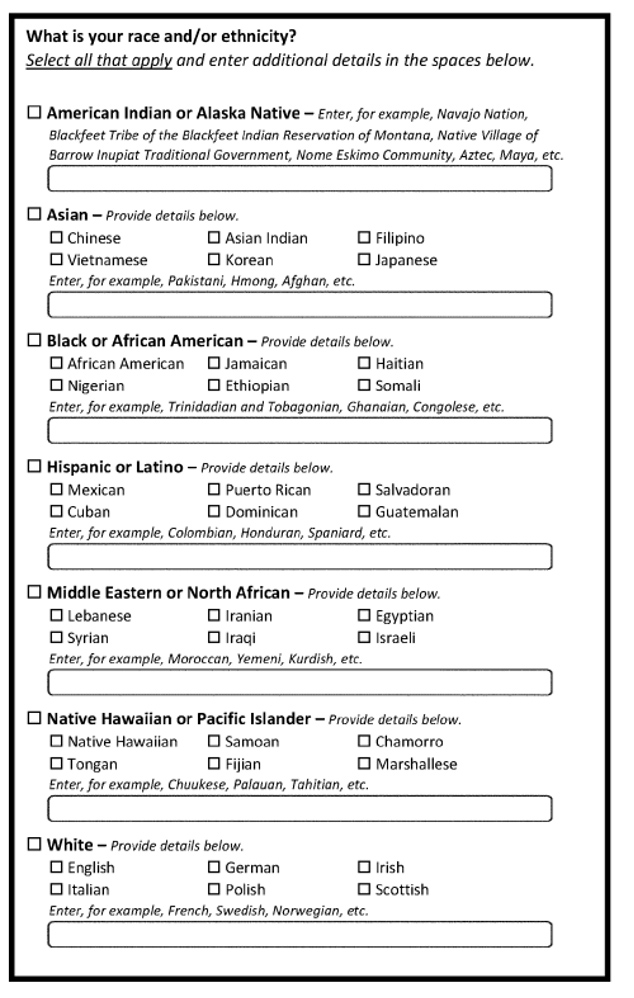
Race and ethnicity are combined into a single question, allowing for multiple responses. Currently, individuals are asked to identify their ethnicity as either Hispanic/Latino or Non-Hispanic/Latino and are then presented with a second question regarding race. The government has eliminated the multi-part question and now asks, “What is your race and/or ethnicity?” Respondents can select as many categories as they choose.
Middle Eastern or North African is added as a reporting category. Currently, individuals with ancestry or origin from the Middle East were considered “White.” Going forward, “Middle Eastern or North African,” also known as “MENA,” will be provided as a separate category and will be removed from the definition of “White.” MENA is defined as “individuals with origins in any of the original peoples of the Middle East or North Africa, including, for example, Lebanese, Iranian, Egyptian, Syrian, Iraqi, and Israeli.”
The Native Hawaiian or Other Pacific Islander category is shortened to “Native Hawaiian or Pacific Islander.” In other words, the word “Other” was jettisoned. (It is not clear why “Native Hawaiian” is necessary as the Hawaiian Islands are Pacific islands.)
More detailed racial information may be requested. In addition to the seven new separate race/ethnicity categories, the default questions will also include subcategories. For example, individuals who identify their race as “Asian” may provide further details by selecting a subcategory, such as Chinese, Vietnamese, Asian Indian, Korean, Filipino, or Japanese, or by entering other information of their choice. Agencies may request an exemption from providing the subcategories in questionnaires by explaining the basis for deviating from the default practice. For example, an agency may raise the concern that the potential benefit of the detailed data does not justify the additional burden on the agency or public.
SPD 15 provides sample questionnaires. Here is one example:
Each federal agency must submit an action plan for implementing these changes within 18 months, and each agency must comply with the revisions in five years (on or about March 29, 2029).
The trickle-down effect of these changes will undoubtedly affect employers, most of whom are required to collect race/ethnicity information from employees for their EEO-1 Reports.
That said, don’t go changing your forms just yet! The Equal Employment Opportunity Commission, as well as other federal agencies like the Office of Federal Contract Compliance Programs, will develop their own plans for complying with the new directive, which will ultimately provide instructions for employers regarding when and how to make changes to comply with applicable laws. We will keep you informed of any new requirements.


