"Undue hardship" defense is likely to become tougher.
The U.S. Supreme Court has agreed to review the undue hardship standard in religious accommodation cases. We expect the standard to become more difficult for employers to meet.
Title VII of the Civil Rights Act of 1964 prohibits discrimination based on religion (among many other things) and since 1972 also requires employers to make reasonable accommodations for employees' religious beliefs or practices. In the 1977 case of Trans World Airlines v. Hardison, the Supreme Court said that undue hardship would be found -- and the employer excused from accommodation -- if the proposed religious accommodation would involve more than a de minimis cost or inconvenience.
Read today, the Hardison majority opinion (written by Justice Byron "Whizzer" White) seems dated, and even quaint. The Court expressed concern that a robust reasonable accommodation obligation would result in "preferential treatment" for religious adherents, which was unfair to their co-workers. The dissent -- by Justice Thurgood Marshall, joined by Justice William Brennan -- took a much more "modern" view of the reasonable accommodation obligation. Their view did not prevail.
But a lot changed after 1977.
In 1990, Congress enacted the Americans with Disabilities Act (which first took effect in 1992), which required reasonable accommodation for individuals with disabilities. The ADA had a reasonable accommodation standard much like that espoused by Justices Marshall and Brennan, including a requirement that "undue hardship" involve a "significant difficulty or expense," taking into account the size of the employer, its financial resources, the nature of the business, and the like. In other words, the hardship had to be significantly more than "de minimis" to be "undue." Reasonable accommodation requirements in the Uniformed Services Employment and Reemployment Rights Act (1994), and the Affordable Care Act (2010) had the same undue hardship standard as the ADA.
As a result, our federal laws have two very different "undue hardship" standards: One (religion) that is pretty easy for employers to satisfy; and three others (the ADA, USERRA, and the ACA) that are almost impossible, at least if you're a large employer.
In 2020, the Supreme Court refused to review a case involving religious accommodation. Although they agreed with the refusal, Justices Samuel Alito, Neil Gorsuch, and Clarence Thomas said that they thought the Hardison undue hardship standard should be reviewed when an appropriate case came along. Then, in 2021, the Supreme Court again refused to review another religious accommodation case (Small v. Memphis Light, Gas & Water), and this time Justice Gorsuch dissented (joined by Justice Alito). Justice Gorsuch really let the Hardison decision have it:
Hardison's de minimis cost test does not appear in [Title VII]. The Court announced that standard in a single sentence with little explanation or supporting analysis. Neither party before the Court had even argued for the rule. . . . Justice Marshall highlighted all these problems at the time, noting in dissent that the de minimis cost test cannot be reconciled with the "plain words" of Title VII, defies "simple English usage," and "effectively nullif[ies]" the statute's promise.
(Second set of brackets in original.)
Which brings us to 2023. The Court has now agreed to review Groff v. DeJoy, a case in which a Christian postal worker in Pennsylvania requested not to work at all on Sundays for religious reasons. (The post office was making Sunday deliveries for Amazon.) Mr. Groff's bosses made some attempts at accommodation, but the attempts were not successful. Either Mr. Groff was left on the Sunday schedule and disciplined for not working, or his co-workers were overworked trying to cover for him. Mr. Groff eventually resigned, and then he sued and lost, and lost again on appeal. However, the fact that the Supreme Court now intends to review the case -- viewed in light of the strong anti-Hardison language in Justice Gorsuch's dissent in Small, as well as the current makeup of the Court -- does not bode well for the "de minimis" undue hardship standard.
In other words, it appears that the Court may adopt an "ADA" undue hardship standard to apply in religious accommodation cases, meaning that the employer refusing to accommodate would have to show that it would face "significant difficulty or expense," taking into account its size and financial resources, and other factors. The Court will also decide whether a finding of undue hardship can be based only on the burden that the religious accommodation creates for co-workers.
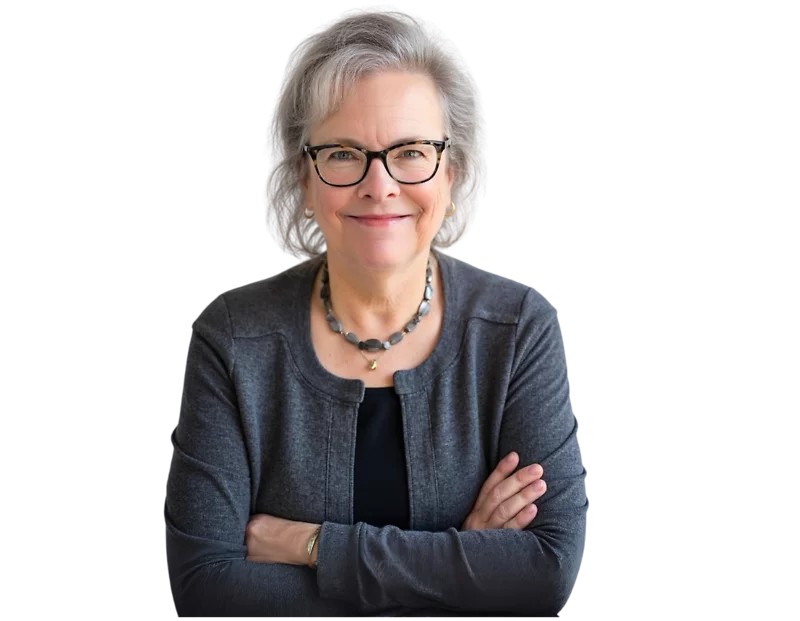 Of Counsel & Chief Legal Editor
Robin also conducts internal investigations and delivers training for HR professionals, managers, and employees on topics such as harassment prevention, disability accommodation, and leave management.
Robin is editor in chief ...
This is Constangy’s flagship law blog, founded in 2010 by Robin Shea, who is chief legal editor and a regular contributor. This nationally recognized blog also features posts from other Constangy attorneys in the areas of immigration, labor relations, and sports law, keeping HR professionals and employers informed about the latest legal trends.