Some good lessons here.
I assume our readers all know what a “constructive discharge” is, but just in case you don’t, it’s when an employer deliberately makes the employee’s life at work so miserable that the employee feels forced to quit.

A “constructive discharge” has the same legal effect as an actual termination. In other words, the employer can be sued just as if it had fired the employee.
For example, let's say a supervisor tries to hit on an employee, and when she rejects his advances, he threatens to fire her. And let’s say that she reports her supervisor’s conduct to HR, and the HR person laughs, tells her to lighten up, and never addresses it with the supervisor or even investigates. Meanwhile, the supervisor's harassment continues and even escalates.
If this hypothetical employee gets fed up and quits (and I hope she does), she will almost certainly be able to claim that she didn’t “voluntarily quit” but reasonably felt that she was forced to quit because of her supervisor’s harassment and threats, and HR’s inaction.
Under federal law and many state laws (check your jurisdiction to be sure), a plaintiff alleging constructive discharge must generally show that the employer “deliberately made working conditions so intolerable that a reasonable person in the plaintiff’s position would feel compelled to resign.” (My emphasis.)
In other words, the bar for plaintiffs is high. My example should get us there. On the other hand, most of the usual workplace baloney – unfair or insensitive bosses, nepotism, favoritism not based on a protected category, employee rivalries, mind-numbing meetings, training that’s a waste of time, stupid rules – is not “intolerable” enough to support a claim of constructive discharge even if you eventually quit over it.
The Case of the Too-Mini Miniskirt
Which brings us to our case.
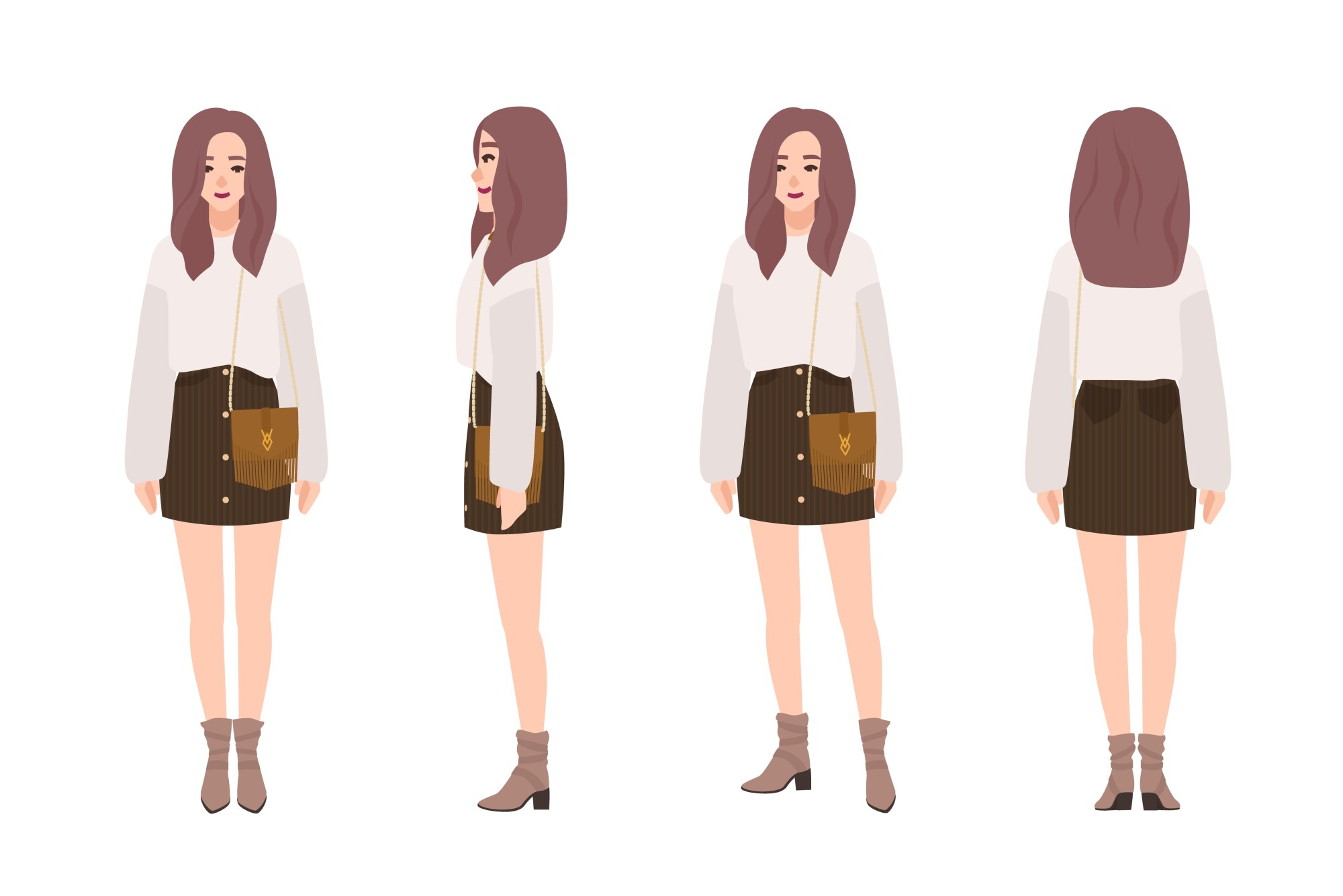
This one is from Australia (thanks, Daily Mail!), but I think we’d get the same outcome in the United States.
Our employee (we’ll call her “Aimee”) worked for a car dealership that had a dress code. It appears that the dress code required skirts to be at or below knee length. (Pants were fine.)
Aimee and some of her co-workers preferred short skirts. From the photos that went with the article, it looked like Aimee’s skirts were about 2-3 inches above the knee when she was standing.
EDITORIAL COMMENT: I thought the skirt looked all right when Aimee was standing, but when she was seated, it looked like the skirt barely covered her loins. If you know what I mean.
A customer made a complaint to the dealership about the “short skirt club.” After the dealership received the complaint, a representative of Human Resources (we’ll call her “Lynn”) met with Aimee and suggested that she “try on a larger skirt size.” Lynn told Aimee that she did not think the customer complaint was justified.

Aimee agreed to shop for longer skirts that weekend.
But for some unexplained reason, she didn’t get around to it.
On Monday, Lynn sent an email to Aimee’s bosses saying that she had talked with Aimee about her skirt length and also said that Aimee’s “body proportions had made it challenging to find a skirt that fitted properly.”
Bless Lynn's heart.
Aimee sent what I think must have been an email to Lynn saying, “I was mortified that these [comments about my body] were copied to other managers within the business. This action wasn’t necessary.” Lynn apologized, and then Aimee asked whether other female employees had been treated the same way. Then somebody told Aimee that it was inappropriate for her to ask for confidential information about other employees.
If you’re like me, you are thinking the dealership could have handled this better. Enforcing a dress code is fine (assuming the code is not discriminatory, which is a whole nuther issue), but talking about an employee’s body size or type is not smart. Sending the email to all of the managers was even less smart, especially if Aimee was going to be copied on it.
But . . .
Aimee contends that she had a mental breakdown over this and was written out of work for 10 days.
Lynn wasn't that bad.
Time frame is unclear (remember, I’m relying on the Daily Mail), but at some point Aimee had a meeting with the General Manager of the dealership, who apologized for the entire incident and said “it just never should have happened.” About 10 days later, the GM told Aimee that all she needed to do was “wear appropriate clothing,” and he suggested that pants would be a fine option.

By now, we’re about four weeks out from the initial meeting with Lynn, and Aimee was still apparently wearing too-short miniskirts to work.
Aimee agreed to try again, but then she changed her mind and asked for [another?] apology from the dealership. The dealership refused to apologize [a third time?], and so Aimee quit.
Then she took legal action against the dealership based on her alleged “constructive dismissal,” which is what they call a constructive discharge in Australia.
The Fair Work Commission threw out her claim, finding that she was not constructively dismissed but resigned voluntarily. Although finding that the employer made some mistakes, the Deputy President said, “Discussing an employee’s skirt length in the context of a uniform policy is within management’s prerogative.”
Even though the discussion should be handled “sensitively,” he said, and even though the dealership should have apologized [again!], Aimee chose to quit. She wasn't forced out. So she had no valid termination claim against her employer.
Would the result be the same in the States?
Yes. Ninety-nine times out of a hundred, anyway. And a U.S. court might be less apt to criticize the employer – since Lynn and the General Manager had each apologized to Aimee already. And Lynn even told Aimee that she didn’t agree with the customer who had complained.
The dealership certainly has the right to require employees to comply with a non-discriminatory dress code. And making a few missteps while doing it – followed by apologies – isn’t enough to render the workplace “intolerable.”
Not in Australia, and definitely not here.
 Of Counsel & Chief Legal Editor
Robin also conducts internal investigations and delivers training for HR professionals, managers, and employees on topics such as harassment prevention, disability accommodation, and leave management.
Robin is editor in chief ...
This is Constangy’s flagship law blog, founded in 2010 by Robin Shea, who is chief legal editor and a regular contributor. This nationally recognized blog also features posts from other Constangy attorneys in the areas of immigration, labor relations, and sports law, keeping HR professionals and employers informed about the latest legal trends.