
Don't go off the deep end.

Alison Green of the Ask a Manager blog had a great column in Slate this week about over-zealous employer team-building activities. Here’s the intro:
“You’re not leaving yet, are you? Team karaoke starts in 10 minutes!”
(Wish I’d thought of that.)
I was tempted to just copy and paste Ms. Green’s entertaining and helpful column into this blog, but that might violate copyright laws, so instead I will link to it and strongly recommend that you read it. Meanwhile, I will focus on the legal implications for employers who are too pushy about ensuring that everyone smells like “team spirit.”
Sorry - I guess that should have been "teen spirit."
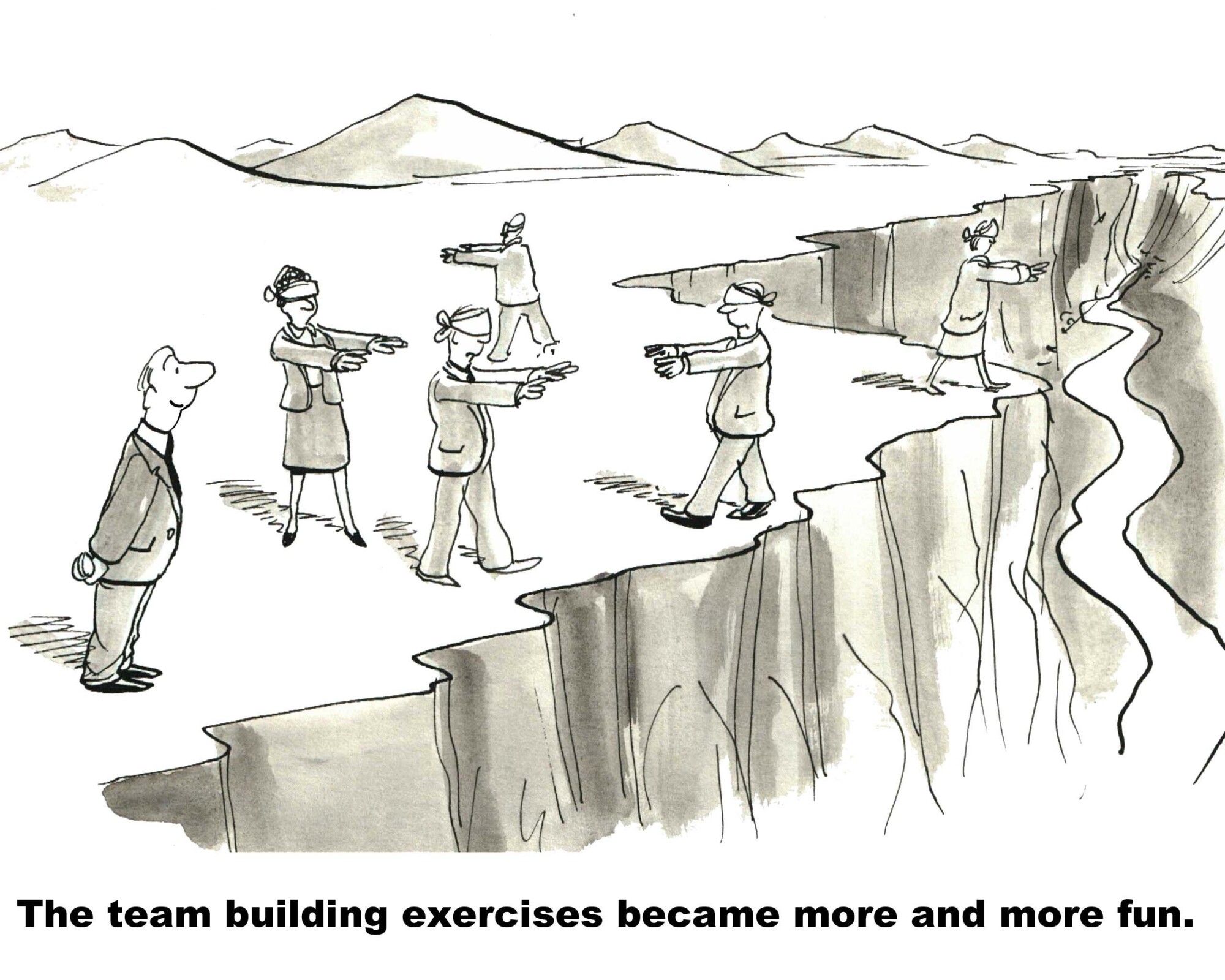
First off, let me confess that I am an INFJ, so my team-building needs are modest. I like my co-workers and enjoy socializing with them. But lunch-in-the-conference-room-with-New-York-style-pizza* every six weeks or so generally satisfies my need for interaction and workplace cohesion of an organized nature.
*Sorry, Chicago- and Detroit-style pizza lovers.
But even if I felt the need for more than that, some of the team-building exercises that Ms. Green’s readers have reported strike me as astoundingly bad:
- "Escape room" exercises
- Extreme sports
- Mandatory yoga
- Sleepovers, camping out
- Company song (and requiring employees to sing it at the end of each meeting)
- Swimsuit events
- “It’s a secret – we’ll tell you when you get there!”
There are potential legal ramifications to making poor team-building choices and making employees feel that they can’t opt out without damaging their careers.
TOP 4 LEGAL RISKS
No. 1: Disability, pregnancy, age, religion claims. Escape room exercises, extreme sports (or even non-extreme but physically demanding), and mandatory yoga are all activities that employees with average or below-average physical fitness may not be able to manage. The good news is that being out of shape is not a “disability” within the meaning of the federal Americans with Disabilities Act or most state or local disability rights laws.
The bad news is that other employees may have bona fide ADA-protected disabilities that make participation difficult. Physical or mental. And depending on the nature of their real job, they may have never had the need to disclose that to you. So now they will be forced to (A) disclose their disability so that they can opt out, or (B) just opt out and be seen as "not a team player." The same could be true for pregnant employees who aren't ready to "announce" yet.
Or you might decide to have a traditional office party where alcohol is served. And one of your employees has alcoholism. And maybe your alcoholic employee believes it is prudent to avoid events where the booze flows freely. Alcoholism is also an ADA-protected disability.
Extreme or strenuous activities may also be difficult for some older employees.
And, finally, about the yoga classes: Yoga is a Hindu spiritual practice, and even the Americanized “exercise” versions sometimes result in religious objections, particularly from evangelical Christians. Hindu employees may also object to participating in a watered-down version of their spiritual practice.
No. 2: Sexual harassment. Employer-sponsored employee sleepover? Swimsuit event? Seriously? I guess alcohol wasn't risky enough.
No. 3: Workers’ compensation and tort liability. If an employer sponsors a team-building activity that involves extreme sports or some other physically demanding activity, what if an employee participates and gets hurt? At the very least, the employer would be liable for the employee’s workers’ comp claim. That’s bad, but it could be worse. Depending on the risks of the event, the level of employer pressure to participate, and applicable law, the injury might fall outside workers’ comp. If so, the employer could be liable for negligent or intentionally tortious conduct, with the possibility of jury trials and significantly higher damage awards.
No. 4: Wage-hour. I’ve assumed the participants in these team-building exercises are exempt under the Fair Labor Standards Act and state wage-hour laws. If so, then no problem (anyway, no wage-hour problem) with requiring the employee to attend an after-hours or weekend social event. You would not have to pay the exempt employee any extra for attending, and you don’t have to pay overtime.
But what if there are participants who are non-exempt, or misclassified as exempt? In that case, you have to pay them for all "hours worked,” and if they are required to attend the event – or “strongly encouraged” to do so – then that will be “time worked” for wage-hour purposes. Meaning you have to pay them for their time. And also meaning that if the after-hours or weekend event puts them over 40 hours for the workweek, you have to pay overtime for those extra hours.
The same applies if non-exempt employees are "voluntold" to help out at the event (serving food or cleaning up, serving as “cheerleaders” along a hiking path, handing out awards at the end, you name it). That is “time worked,” and it has to be paid. If it’s overtime, you have to pay overtime.
TOP 4 SOLUTIONS
Fortunately, all four of these risks are pretty easy to avoid, as long as you know the score before you finalize plans for your team-building event.
No. 1: There’s no “survival of the fittest” in “T-E-A-M.” When you choose a team-building activity, think about your least-fit, oldest employees, as well as any employees with disabilities or pregnancies. Would they feel unsafe or be uncomfortable participating in the activity? Would they be unable to participate at all? If so, choose a less strenuous (or, in the case of a swimsuit event, less “revealing”) activity.

No. 2: Let employees opt out. Even if you tried to choose an activity suitable for employees of all ages, medical conditions, and fitness levels, leave the door open for employees to send their regrets. First, as we've already discussed, they may have medical or other conditions that you don’t know about and don’t need to know about. Second, they may have personal commitments that prevent them from participating (for example, single parents with small children). Don’t make them feel they are jeopardizing their careers if they don’t attend. And don't forget about those wage-hour issues. "Voluntary" is good.
No. 3: If possible, schedule the event to take place on regular work days and during regular working hours. Based on all the wage-hour stuff I have already discussed.
No. 4: Don’t keep it a secret. Apparently some employers think it’s cute to invite employees to a "mystery" team-building event without telling them what will happen. It's not. If employees don’t know what is going to happen at the event, then they won’t be able to make an intelligent decision about whether they can participate or under what circumstances.
No. 5: (BONUS) Oh, and one other thing, which you already knew. If you do serve alcohol, take all the usual precautions.
 Of Counsel & Chief Legal Editor
Robin also conducts internal investigations and delivers training for HR professionals, managers, and employees on topics such as harassment prevention, disability accommodation, and leave management.
Robin is editor in chief ...
This is Constangy’s flagship law blog, founded in 2010 by Robin Shea, who is chief legal editor and a regular contributor. This nationally recognized blog also features posts from other Constangy attorneys in the areas of immigration, labor relations, and sports law, keeping HR professionals and employers informed about the latest legal trends.