With maybe some relief for employers.
This week, the General Counsel of the National Labor Relations Board publicly released some advice memoranda that indicate better times for employers and possibly tougher times for unions and workers in the gig economy.
(And tougher times for Scabby the Rat.)
Advice Memoranda provide direction to the NLRB's Regional Offices about whether to issue complaints based on unfair labor practice charges, or whether to dismiss the charges. Memoranda that recommend dismissal must be released immediately. Memoranda that recommend issuance of a complaint can be released at the General Counsel's discretion but only after the cases have concluded.
Here is a summary.
Union breached its duty of fair representation. In the first memorandum, issued on December 12, 2018, the General Counsel recommended issuance of a complaint in connection with an unfair labor practice charge brought by an employee against the Service Employees International Union. An employee filed a grievance alleging that the employer violated its policy and practice with respect to the scheduling of overtime. When the employer denied the grievance, it sent the denial to the union, who did not forward the denial to the union steward. The employee asked the steward about whether the employer had ever responded, and the steward said that he had not received anything. The employee made several calls to a "Union Contract Specialist," who never returned his calls.
The steward eventually got around to asking the employer about its response, and the employer sent the steward a copy of the denial that it had sent to the union a couple of months earlier. By this time, the deadlines in the grievance procedure had all expired. The union continued to (allegedly) ignore the employee, so he filed an unfair labor practice charge against the union, saying that the union had breached its duty of fair representation.
The General Counsel, in directing issuance of a Board complaint against the union, noted that a union's "mere negligence" in connection with the processing of grievances does not violate the Act. Rather, the behavior of the union must be "discriminatory, arbitrary, or perfunctory" to be a violation. However, he said, "where a union undertakes to process a grievance and then, for no good reason, fails to do so, its 'nonaction amount[s] to a willful failure to pursue the grievance, and [is] therefore perfunctory." In addition, the union's failure to communicate with the employee "constitutes arbitrary conduct in violation" of the NLRA. Specifically, the General Counsel said that the union should have forwarded the employer's response to the steward, and that the steward should have bothered to check with the union on the status.
Banner and inflatable cat at general contractor's worksite is unlawful secondary and signal picketing. A local of the International Brotherhood of Electrical Workers was in a labor dispute with a subcontractor on a construction site in Chicago. The union placed "a large, stationary banner proclaiming a labor dispute with the general contractor, as well as a large, inflatable cat clutching a construction worker by the neck." In the Advice Memorandum issued on December 20, 2018, the General Counsel recommended issuance of a complaint against the union and that the Region "urge the Board to reconsider" decisions issued in 2010 and 2011 holding that similar activity (including use of the infamous Scabby the Rat) was not "picketing" and therefore not unlawful when directed at neutral parties. In the view of the General Counsel, "the Union's activity was tantamount to unlawful secondary picketing, and signal picketing that unlawfully induced or encouraged neutral employees to cease working" or was "unlawfully coercive non-picketing conduct."
Dues checkoff authorization must be crystal clear. In an Advice Memorandum dated April 1, 2019, the General Counsel recommended dismissal of an unfair labor practice charge (failure to bargain) against an employer. This case also involved the IBEW, but in Texas.
The collective bargaining agreement authorized the employer to deduct union dues from employees' wages. The authorization forms said that the money would go to IBEW Local 2078, period. There was no provision for successorship or any other contingency, and no other entity was authorized to receive the wages.
Local 2078 fell upon hard times, and it was absorbed into another IBEW Local, Local 2337. The bank account for Local 2078 was closed, and the union directed the employer to continue checkoff but to send the money to Local 2337. Although the company continued to bargain with Local 2337, it refused to do any more checkoff unless the employees signed new authorizations directing that their dues go to Local 2337.
The union filed a charge, and the General Counsel recommended that it be dismissed. An authorization for dues checkoff "must be 'clear and unmistakable.'" And to meet that standard, the authorization must be specific. Although it was "not unreasonable" for Local 2337 to contend that it "inherited" Local 2087's right to receive the dues, the forms applied "only to Local 2087" and contained no alternatives. Therefore, even though Local 2337 was a successor to Local 2087, the employer could rightfully insist on new authorizations before resuming dues checkoff.
The Uber-memo. This one is probably the most significant of the bunch, and it is relatively recent (dated April 16 of this year). The General Counsel concluded that Uber drivers operating under the arrangements in place during most of 2015 and part of 2016 were independent contractors, not employees, which means that they had no rights under the NLRA.
The General Counsel applied the standard set forth in the Board's recent SuperShuttle DFW decision. In determining whether a worker is an independent contractor or an employee for NLRA purposes, the key question is the "entrepreneurial opportunity" that the worker has. In making that determination, the Board looks at 10 factors:
- The control that the entity exercises over the details of the work.
- Whether the worker "is engaged in a distinct occupation or business."
- The type of occupation, including whether the work is normally supervised or performed without supervision.
- The skill required.
- Whether the entity or the worker provides tools, equipment, and a worksite.
- "The length of time for which the person is employed."
- Whether the worker is paid by time, or by the job.
- Whether the work is part of the entity's regular business.
- Whether the worker and entity believe they are creating an employment relationship.
- Whether the worker is in business.
Another factor that weighed in favor of the "independent contractor" finding was that the drivers indemnified Uber for liability based on the drivers' conduct, and Uber was not responsible for riders' conduct. According to the General Counsel, "[t]hese contractual provisions greatly lessened Uber's motivation to control drivers' actions, since Uber was not liable for drivers' or riders' negligent or intentionally harmful acts."
Although Uber had in place various "quality control" and customer satisfaction metrics, the General Counsel found that they were "too general" and did not affect the drivers' entrepreneurial opportunities.
The method of payment -- taking a percentage of the fare received by the driver -- was, at worst, "neutral" for Uber. It did indicate that drivers were paid "by the job" rather than for their time, and the drivers retained their freedom to drive for Uber, drive for an Uber competitor, or not drive (or work) at all.
Regarding equipment, the drivers supplied their own vehicles, and paid for their own gas and maintenance. In addition, they were not supervised by Uber. Their contracts expressly said that they were independent contractors, and not employees.
This Advice Memorandum applies to the NLRA only. State laws, and even other federal laws, may have different standards in determining whether a worker is an independent contractor or an employee. *cough* California *cough*
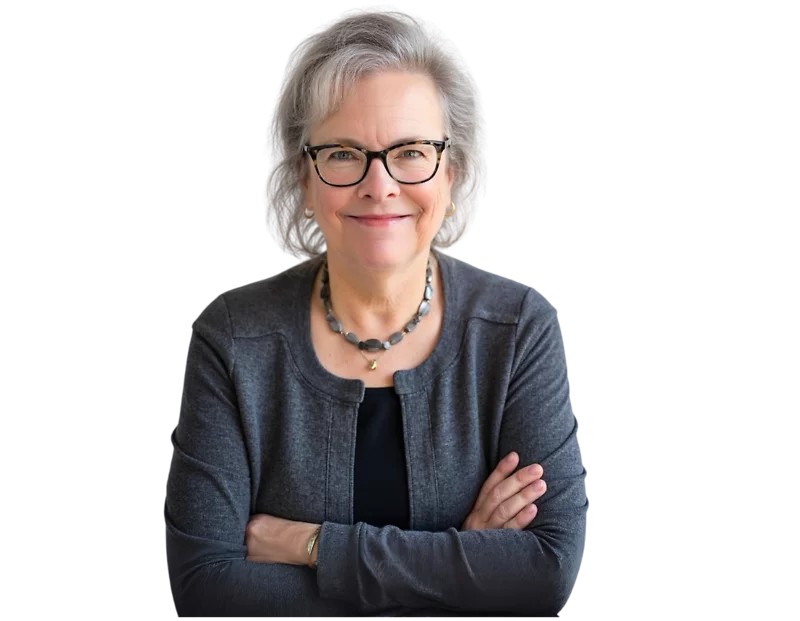 Of Counsel & Chief Legal Editor
Robin also conducts internal investigations and delivers training for HR professionals, managers, and employees on topics such as harassment prevention, disability accommodation, and leave management.
Robin is editor in chief ...
This is Constangy’s flagship law blog, founded in 2010 by Robin Shea, who is chief legal editor and a regular contributor. This nationally recognized blog also features posts from other Constangy attorneys in the areas of immigration, labor relations, and sports law, keeping HR professionals and employers informed about the latest legal trends.