An unfriendly field.
On May 22, 2025, Darin Ruf, a former utility player for the Milwaukee Brewers and several other clubs, sued the Cincinnati Reds in Ohio state court arising out of an allegedly career-ending knee injury.
Mr. Ruf was injured on June 2, 2023, while chasing a foul ball down the first base line at the Reds’ Great American Ball Park. He injured his knee when he ran into the end of a rolled-up tarp which, he alleged, was not properly padded.
The Reds attempted to remove the case to federal court, arguing that Mr. Ruf’s claims were preempted by the collective bargaining agreement between Major League Baseball and the Major League Baseball Players Association.
In an Opinion and Order issued in January of this year, the court granted Mr. Ruf’s motion to remand the case to state court, calling the Reds’ effort at removal “a swing and a miss.”
It is the latest loss on this issue for MLB clubs. Clubs in the National Football League have had more success.
The preemption playbook
All of the major American sports leagues have negotiated comprehensive contracts with their counterpart unions that address a wide range of issues affecting the terms and conditions of employment for the players. Those contracts provide that, in the event of a dispute as to whether the league, a club, a union, or a player abided by their obligations under the contract, the dispute will be settled through a confidential arbitration process. As a result, in each league, dozens of grievances are filed and resolved each year, typically without any public awareness.
Nonetheless, players have occasionally brought lawsuits against a league or clubs in the courts for conduct that they argue is not covered by the applicable contract. The leagues and clubs involved seek to have the cases dismissed, arguing that claims are preempted (barred) by the contract, pursuant to the federal Labor Management Relations Act.
In the 1985 case of Allis-Chalmers Corp. v. Lueck, the U.S. Supreme Court ruled that claims whose resolution is “substantially dependent upon analysis of the terms of” a collective bargaining agreement are preempted. Instead, the claims must be brought under the arbitration provisions contained in the contract. The intended and frequent result is dismissal of the claims.
Preemption in practice
The cases that have presented the most difficulty for leagues (and courts) are those like Mr. Ruf’s, where a player has alleged that he suffered an injury due to negligently maintained field conditions.
One of the most well-known cases concerns former NFL running back Reggie Bush. In 2016, Mr. Bush sued the St. Louis Rams and their stadium authority when, at the conclusion of a play, he slipped and fell on a concrete surface surrounding the turf playing field, sustaining a knee injury that ended his career. A federal court rejected the Rams’ arguments that Mr. Bush’s claims were preempted. Although at the time the NFL and the National Football League Players Association had a “Joint Committee for the purpose of discussing, among other things, the player safety and welfare aspects of playing equipment, playing surfaces, and stadium facilities[,] [t]he Joint Committee d[id] not have the power to commit or bind any of the signatories to the [agreement]… nor does the [agreement] establish a contractually agreed upon standard of care applicable to Plaintiff's claims.”
In 2020, a jury awarded Mr. Bush $12.5 million.
A similar decision was reached the following year in a case brought by DeMeco Ryans, then with the Philadelphia Eagles and now head coach for the Houston Texans. Mr. Ryans injured his Achilles tendon due to what he alleged was a dangerous playing surface at the Texans’ NRG Stadium. A Texas state court held that it did not need to analyze the collective bargaining agreement to evaluate Mr. Ryans’ negligence claim, and therefore that the claim was not preempted.
Whether in response to these losses or not, the NFL changed its practices in a way to seemingly avoid similar litigation in the future. As part of the 2020 contract, the NFL and the union added a section establishing and discussing the responsibilities of their joint Field Surface Safety & Performance Committee. That Committee is responsible for establishing and enforcing playing field standards, codified as the Field Surface Manual.
In 2023, a federal court granted a motion to dismiss by the NFL and the Los Angeles Chargers against claims brought by former Denver Broncos linebacker Aaron Patrick arising out of injuries he suffered on the field during a 2022 game. The court ruled that the claims were preempted, holding that “resolution of Patrick’s claims, and specifically determination of the scope of each defendant’s duty and potential liability, would require interpretation of the [collective bargaining agreement],” including the Field Surface Manual.
Baseball at bat
By comparison, MLB and its clubs have struggled in these cases.
In 2018, a federal court in Illinois held that claims brought by former New York Yankees’ outfielder Dexter Fowler arising out of an on-field injury at the Chicago White Sox’s Guaranteed Rate Field were not preempted. The court rejected the defendants’ argument that resolution of Mr. Fowler’s claim required interpretation of Article XIII of the collective bargaining agreement, which established a joint Safety and Health Advisory Committee because the Committee had no binding authority or supervisory role.
In 2021, the owner of the San Francisco Giants’ stadium argued that claims brought by former outfielder Mac Williamson after he tripped over a bullpen mound in foul territory were preempted by (1) a contract provision governing player pay in the event of an injury, (2) the league’s concussion protocols, (3) league rules permitting bullpens on the field, and (4) the contract’s grievance arbitration mechanism. The court disagreed, relying in part on the fact that Mr. Williamson was suing the stadium owner rather than the club.
The Reds have now suffered the same fate after trying to rely on the contract provisions raised in the Fowler and Williamson cases, and arguing that they were wrongly decided. The court in the Ruf v. Reds case noted that the NFL’s Field Surface Manual “imposed mandatory duties,” whereas the MLB Committee does not. The court also awarded Mr. Ruf’s attorneys $7,350 in fees for having had to move to remand.
Since remand, Mr. Ruf has filed a motion for leave to file an amended complaint.
The next pitch
The Ruf case seems likely to eventually settle, as most cases do.
Yet, MLB must be asking itself whether changes need to be made to avoid future claims. It could work with the union to craft a set of mandatory field safety rules. As in Patrick, the rules could give MLB and its clubs a powerful argument that to evaluate a player’s negligence claim, they would have to interpret the collectively bargained rules, and as a result the claim is preempted.
However, MLB may have made the decision that retaining near-unilateral control over field safety is more important than facing the occasional player lawsuit.
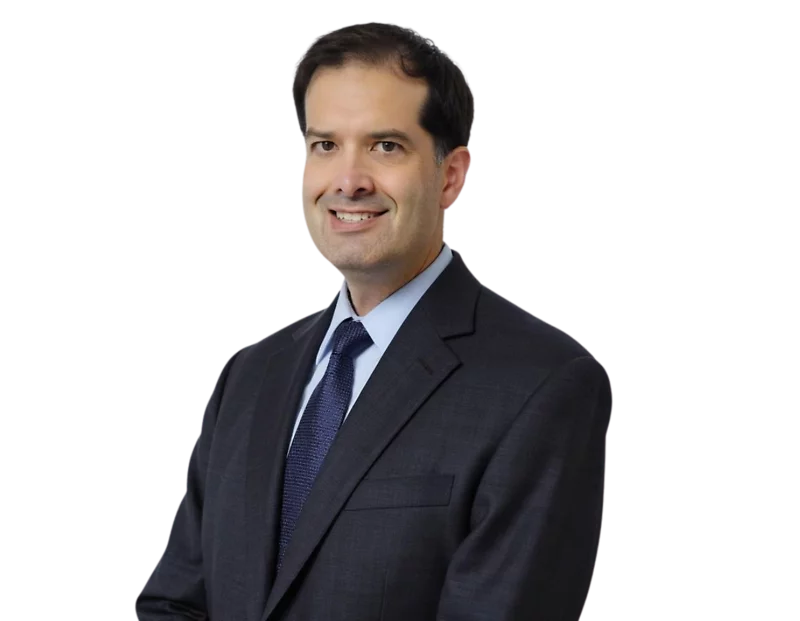
 Senior Counsel
He represents and advises businesses on a broad range of labor and employment matters, including discrimination complaints, wage and hour claims, class actions, employment agreements, restrictive covenants, data privacy ...
This is Constangy’s flagship law blog, founded in 2010 by Robin Shea, who is chief legal editor and a regular contributor. This nationally recognized blog also features posts from other Constangy attorneys in the areas of immigration, labor relations, and sports law, keeping HR professionals and employers informed about the latest legal trends.