
Before firing an employee for dishonesty, do all your homework.
Employers, when we attorneys advise you to “tie up one loose end” before deciding to terminate an employee, it’s not because we're trying to make your life harder.
We’re trying to make sure you don’t end up like this employer.
It started out so well . . .
Our plaintiff (we’ll call her “Melanie”) had a 13-year-old son with cancer. She informed her employer that she would need to take time off to care for him.
There is no doubt that the son’s condition was a qualifying “serious health condition” within the meaning of the Family and Medical Leave Act.
When Melanie requested the leave, her employer promptly gave her all the FMLA paperwork, including a medical certification form for the son. The employer also informed her that part of the medical certification had to be completed by the son’s health care provider and returned in 15 days. Melanie then began her leave.
As of a couple of days after the 15-day deadline, Melanie had still not returned the medical certification form. The Human Resources representative contacted her and said that she needed to get the form turned in. Melanie replied that she would get it completed that day, during her son’s medical appointment with Dr. Julie.
That was the last the employer heard from Melanie that day.
The following day, HR contacted Melanie again and said they needed to have the completed form turned in by close of business that day. Melanie sent in a form. The form had handwritten details about the son’s condition and treatment, and it was illegibly signed by somebody. (Must've been the doctor, am I right?)
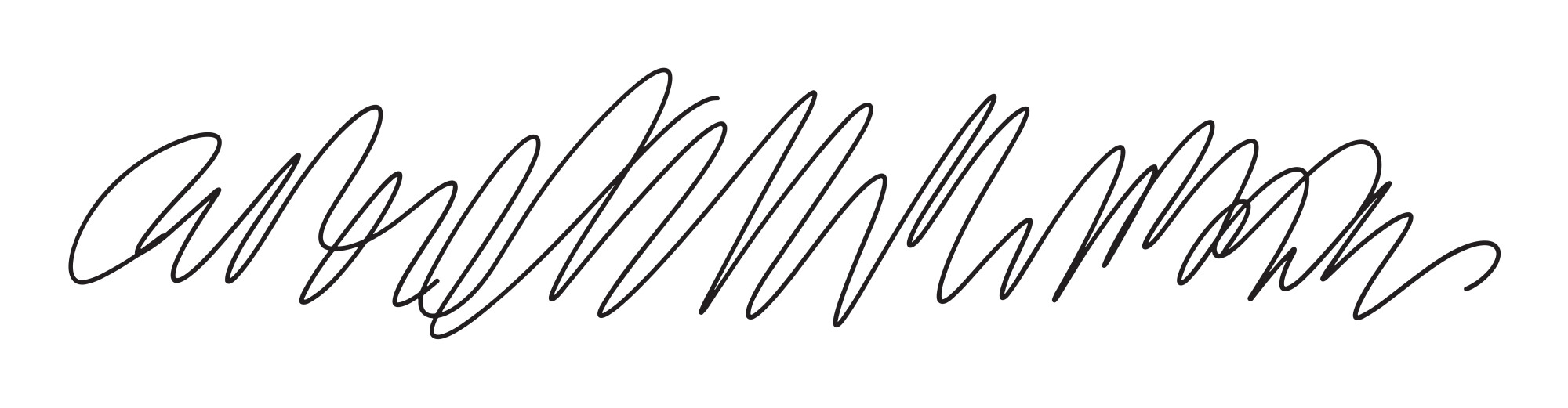 Not the actual signature. But it was about this bad.
And the section with the health care provider’s contact information (top of Section III) was left blank.
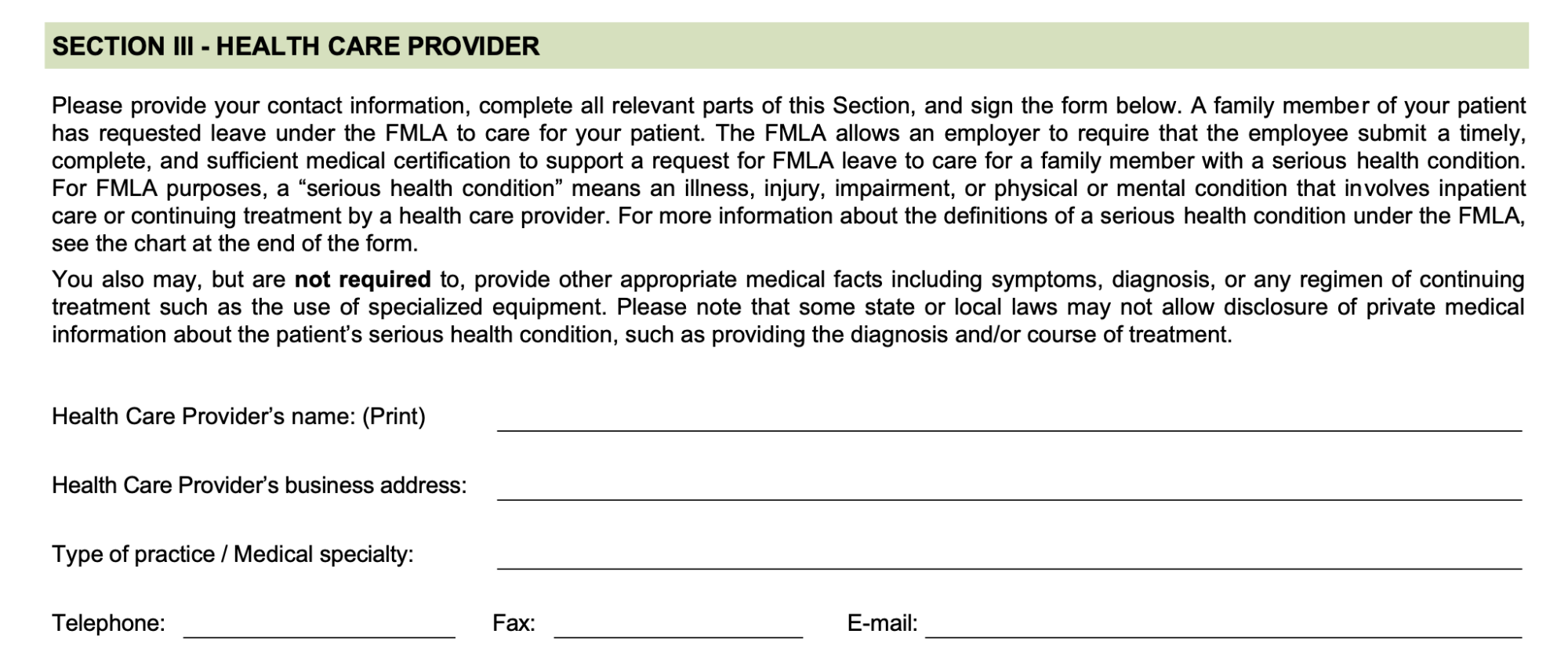 This is the part I'm talking about.
The HR representative told Melanie to get Section III completed by the end of the week.
Here’s where things get messed up
Here’s where things get messed up.
According to Melanie, she couldn’t get in touch with Dr. Julie, who was apparently on maternity leave, and her office was closed. So Melanie contacted her son’s patient advocate from a different medical practice. (The doctors at this second practice were going to provide the son’s treatment if pathology confirmed his initial diagnosis.) According to Melanie, the patient advocate suggested that Melanie list these "treating" physicians instead.
So that’s what Melanie did, and she apparently is the one who filled in the top of Section III with these two other doctors' names and contact information.
Editorial comment: It sounds like Melanie was in a medical-legal bureaucratic hell. I’ve reviewed the court file in part, and it doesn’t look to me like she was dishonest. From what I can tell, the only part she filled out for the treating doctors was the field for their names, addresses, and contact information. It doesn't look like she forged any signatures or made up pertinent “facts” about her son’s condition. Those parts, I think, were completed by Dr. Julie before Dr. Julie went out on leave.
Anyway, Melanie turned in the medical certification, including the original medical information and illegible signature, the names and contact information for the two treating physicians, and no new signatures.
It appeared to HR that the illegible signature on the form did not match the names of either of the two treating physicians. (How HR was able to read the signature to tell that, I'll never know.)
So HR contacted the patient advocate and asked whether the form was “legitimate.” The patient advocate checked, and replied that neither of the two treating physicians had signed the form. The advocate recommended that HR check with Dr. Julie, and provided Dr. Julie’s phone number.
So HR followed up with Dr. Julie, right?
Wrong.
Well, HR asked Melanie about the apparent discrepancies, right?
Wrong.
Based on its investigation which did not include this follow-up, HR determined that Melanie had falsified her medical certification form and fired her that very day.
You'll never guess what happened next!
Melanie sued for FMLA retaliation. The employer filed a motion for summary judgment. In a decision issued last Friday, the court denied the employer's motion, meaning that Melanie's case will go to trial if it doesn’t settle.
The court correctly acknowledged that bad timing alone wasn't enough to defeat the employer. And, under the “good-faith honest belief” rule, the employer wouldn’t necessarily lose just because it turned out to be wrong about the alleged falsification (if indeed it was wrong).
But, according to the court, it was a problem that there was bad timing coupled with the failure to follow that last lead provided by the patient advocate – in other words, failing to call Dr. Julie to determine whether she had signed the form. And failing to ask Melanie about it before firing her.
In another twist, Melanie’s attorney pointed out to the court that the signature on the medical certification appeared to be a “J” followed by illegible scribble.
 For illustrative purposes only. Not the actual signature.
Editorial comment: The real certification form is in the court file. It looks like a great big “J” with a wavy line following it.
As already noted, the diagnosing/referring physician, the one on maternity leave, is named “Julie.” One of the treating physicians from the other medical practice is named “Jonathan.”
The court said that the “J [wavy line]” signature could indicate that the form was signed by Dr. Jonathan. In other words, maybe the employer didn’t have a reasonable basis to suspect that a treating physician hadn’t signed the certification!
Editorial comment: I’m not sure I agree with the court on this point since the same signature was on the original form, and it was dated a few weeks earlier . . . but whatever.
Anyway, whether this was retaliation against Melanie for wanting to take FMLA leave or just an HR snafu is far from clear. But I do agree with the court that the employer would probably not be facing a jury trial if it had (1) tried to follow up with Dr. Julie, and (2) followed up with Melanie before making the decision to fire her for falsification.
My standard summary judgment disclaimer is available here.
Moral
Employers, when documentation submitted by an employee looks suspicious, do follow all possible leads before assuming falsification was involved and terminating the employee. This applies not only to weird-looking FMLA paperwork, but also to time records and all other documentation where employees are required to be truthful.
And another thing: Compliance with technical FMLA medical certification requirements can be a nightmare for employees, who aren't lawyers and are already dealing with the stress of their own or their family member's serious health condition. And doctors hate filling out these forms. Some even charge their patients for doing it. Given all that, employers should consider cutting employees some slack on the legal deadlines. And even if the employees fill in names and contact information so the doctors don't have to do it themselves, that shouldn't be the end of the world as long as the doctors themselves have confirmed the substantive parts of the form.
 Of Counsel & Chief Legal Editor
Robin also conducts internal investigations and delivers training for HR professionals, managers, and employees on topics such as harassment prevention, disability accommodation, and leave management.
Robin is editor in chief ...
This is Constangy’s flagship law blog, founded in 2010 by Robin Shea, who is chief legal editor and a regular contributor. This nationally recognized blog also features posts from other Constangy attorneys in the areas of immigration, labor relations, and sports law, keeping HR professionals and employers informed about the latest legal trends.