Hindsight is 20-20.
The Pregnant Workers Fairness Act, which took effect in June 2023, requires reasonable accommodations for pregnancy, childbirth, and “related medical conditions.” The statute gave authority to the U.S. Equal Employment Opportunity Commission to issue regulations more precisely defining employers’ reasonable accommodation obligations.
The EEOC did that, during the Biden Administration, and made it clear that the PWFA applies to many, many, many things beyond the nine months of gestation.
Including lactation.

IT'S AS PLAIN AS THE NOSE ON MY FACE!"
The EEOC under the Trump Administration has backed away from some of the positions that it took during the Biden Administration – most notably, whether the Act requires employers to make reasonable accommodations related to elective abortions. But apart from the abortion issue, the Trump EEOC seems to be generally pro-pregnancy, pro-pregnancy accommodation, and pro-PWFA.
And, I suspect, pro-lactation accommodation. The PUMP for Nursing Mothers Act requires covered employers to provide lactation accommodation for the first year after the baby is born. But the EEOC’s position is that lactation accommodation is also required under the PWFA. Generally, if an employer is complying with the PUMP Act, it should also be in compliance with the PWFA as it applies to lactation accommodation. But employers who are not covered by the PUMP Act, or employers who are covered but whose employees want to continue nursing beyond the first year, are required by the Pregnant Workers Fairness Act to provide lactation accommodation.
Clear as mud, huh? The EEOC has published a helpful chart comparing and contrasting employer obligations under the PWFA and the PUMP Act.
(In not-entirely-off-topic breaking news, the Senate last night confirmed EEOC Acting Chair Andrea Lucas to another five-year term on the Commission.)
Which bring us to our lawsuit . . .
The plaintiff (we’ll call her “Ashley”) sued the U.S. Department of Defense for failing to accommodate her lactation needs. Ashley was an “preventionist/exercise physiologist” working for a DoD contractor in San Antonio.
Ashley was allergic to artificial scents, which has nothing to do with pregnancy, but it will become important later.
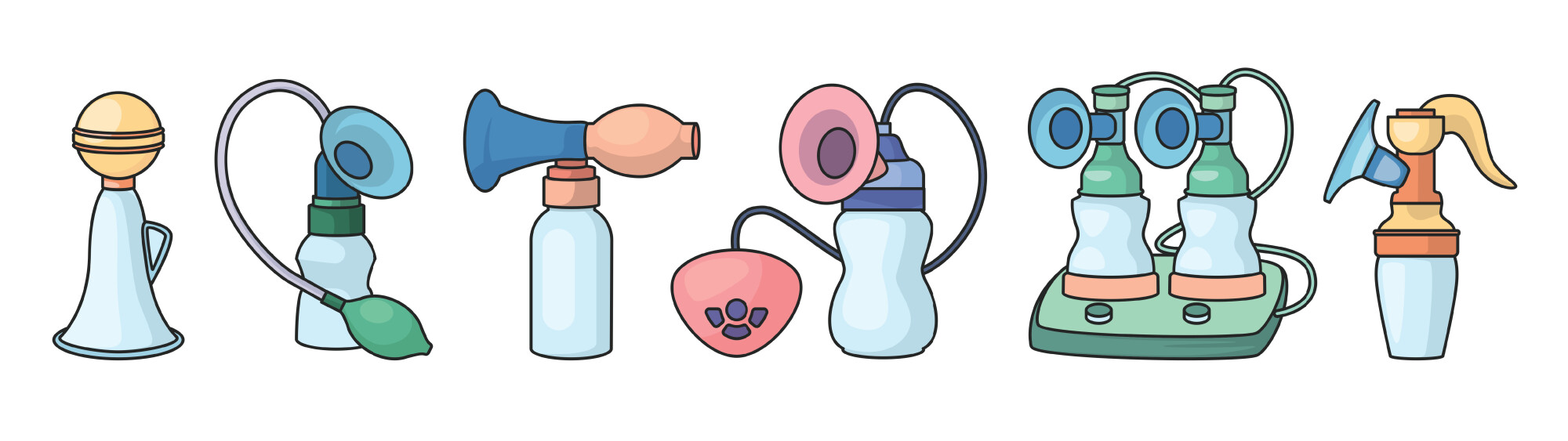
According to her lawsuit, Ashley had a baby in late 2022. She returned from maternity leave in March 2023, before the PWFA took effect and while she was still nursing. In July 2023 – shortly after the PWFA took effect – she was transferred to a different work location (presumably for reasons unrelated to the baby). At the new location, she had to walk a long distance to the lactation area, which exposed her to artificial scents that exacerbated her allergies. She complained about it and was told that she should “adjust her breastfeeding schedule.” She claimed that she stopped nursing her baby in August 2023 for this reason.
Ashley got pregnant again in February 2024, while the PWFA was in effect but before the EEOC issued regulations and unequivocally stated that lactation had to be accommodated under the PWFA. Ashley allegedly resigned from her job in March 2024 because the DoD would not accommodate her. The EEOC regulations came out the following month.
In August 2024, Ashley sued, claiming violation of the Pregnant Workers Fairness Act based on the DoD’s failure to accommodate her lactation needs, among other claims. Just before President Trump took office, the DoD filed a motion to dismiss the lawsuit.
This week, Judge Jason Pulliam, a Trump appointee, denied the motion to dismiss Ashley’s PWFA claim. First, he ruled that lactation was obviously a condition related to pregnancy. (I’m not sure that would have been clear to the DoD at the time, as I'll discuss below.) Second, he ruled that, if there was any doubt on that point, the EEOC cleared it up when it issued its regulations.

In defense of Defense (I love saying that!), all of this happened before the EEOC regulations came out, so, arguably, how were they to know? The statute references “related medical conditions,” but it says nothing specifically about lactation. And at the time, there was another federal law (the 2010 Nursing Mothers Act) that did require lactation accommodation. I think the silence of the PWFA on lactation, coupled with a different federal law that covered lactation, gives some support to the DoD’s argument that it was not required by the PWFA to accommodate lactation. Or at least didn't know that it was required to do so until the EEOC issued its regulations.
In April 2024.
After Ashley was gone.
On the other hand, the federal appeals court that covers Texas issued a decision in 2013 saying that discrimination based on a mother’s lactation needs violated the older Pregnancy Discrimination Act, even though the PDA says nothing about lactation. Judge Pulliam didn’t mention this decision, but I do think it supports his finding that it was freakin’ obvious* – even without EEOC regulations saying so specifically – that lactation was a “related medical condition.”
*Judge Pulliam may not have used the actual words "freakin' obvious."
So Ashley’s PWFA claim will go forward. This decision came at the earliest stage of the lawsuit, when the court is required to assume that everything the plaintiff alleges in her complaint is true. After the parties engage in discovery, it’s possible that the evidence will show that the DoD bent over backward to accommodate her, or that Ashley’s allergy claims were bogus, or that the "long" distance to the lactation room was actually 10 feet without a fragrance in sight. Er, smell. In which case, the DoD will win.
At the end of his order, the Judge also changed the defendant from Lloyd Austin, Defense Secretary under President Biden, to Pete Hegseth, Defense Secretary under President Trump.
He had to do it, but that had to hurt.
 Of Counsel & Chief Legal Editor
Robin also conducts internal investigations and delivers training for HR professionals, managers, and employees on topics such as harassment prevention, disability accommodation, and leave management.
Robin is editor in chief ...
This is Constangy’s flagship law blog, founded in 2010 by Robin Shea, who is chief legal editor and a regular contributor. This nationally recognized blog also features posts from other Constangy attorneys in the areas of immigration, labor relations, and sports law, keeping HR professionals and employers informed about the latest legal trends.