I hope that Teams conference from the Canadian side of Niagara Falls was worth it.
I feel like I’m always picking at employers for mishandling reasonable accommodation requests.
But I submit today's post as Exhibit A in my defense. Based on what we know now, I'm with the employer on this one.
Our plaintiff (we’ll call him “Dylan”) worked for a major city that was the site of the first Labor Day celebration in the United States of America.
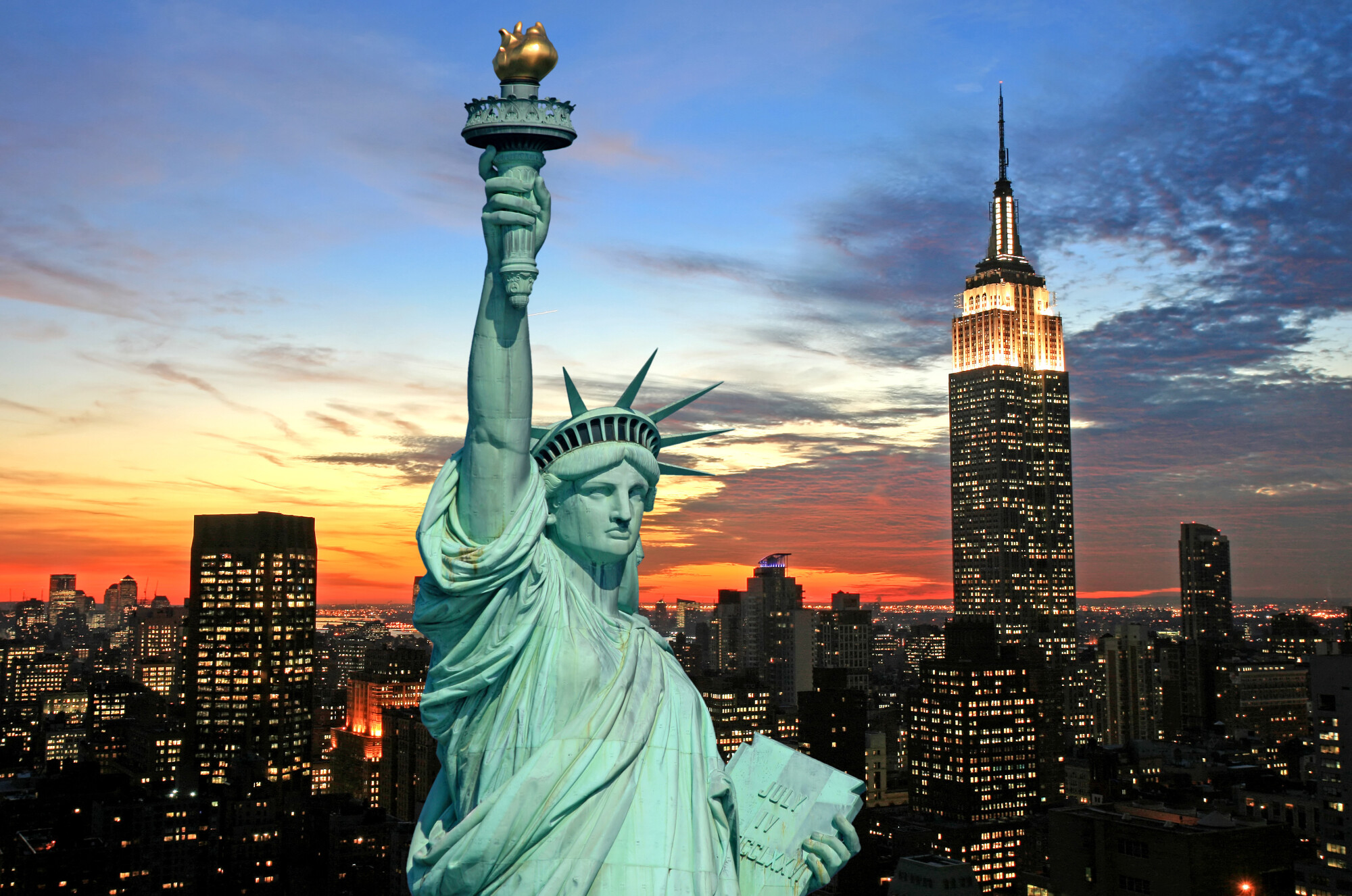 In case you needed more of a hint . . .
Dylan had what sounds like a good job, and it involved a lot of computer work and conference calls, but also in-person site visits.
During COVID-19, the City employees went remote. That included Dylan. In the spring of 2021, Dylan asked to be allowed to continue working remotely full-time as a reasonable accommodation for a number of medical conditions. It's not clear whether he had always had those medical conditions, or whether he was diagnosed more recently.
Anyway, the City granted his request.
For the next few years, Dylan submitted renewed requests for the same remote-work accommodation, and the City granted them for the most part. But at some point, Dylan’s supervisors expressed concern about the fact that there was no end in sight to Dylan's "100 percent remote work" needs.
The details and timeline of this case are ridiculously complicated, so I'll oversimplify. Dylan and the City agreed that he could move into a lower-level position, do the site visits in person, and do the rest of his job from home. But they continued to butt heads over the indefinite remote work. In March 2025, Dylan sued, alleging violations of the Americans with Disabilities Act, the Rehabilitation Act of 1973, the New York State Human Rights Act, and the New York City Human Rights Act.
After the lawsuit was filed, the City determined that Dylan had been doing some globe-trotting during the period that he was allegedly unable to come to the office at all.
The City conducted an investigation and determined that, during the period that Dylan “had” to work from home nearly full-time, he had made two trips by air to Cancún, and one each to Austria, Aruba, the Dominican Republic, and Poland, and one road trip to Canada.
*Canada and New York share a border, so it's not clear that the Canadian trip in itself was that big a deal. The court’s decision doesn’t say whether Dylan went to, for example, Niagara-on-the-Lake – just over the international border, on the southwest side of Lake Ontario (sorry, Mr. President – I meant “Lake America”) – or whether he went to, say, Yellowknife, Northwest Territories, a zillion miles away. But since he drove, I'm going to assume his destination was somewhere in Ontario. The province, not the lake.
 Even Niagara Falls is a trek from NYC. (Adobe needs to update its maps of the Great Lakes!)
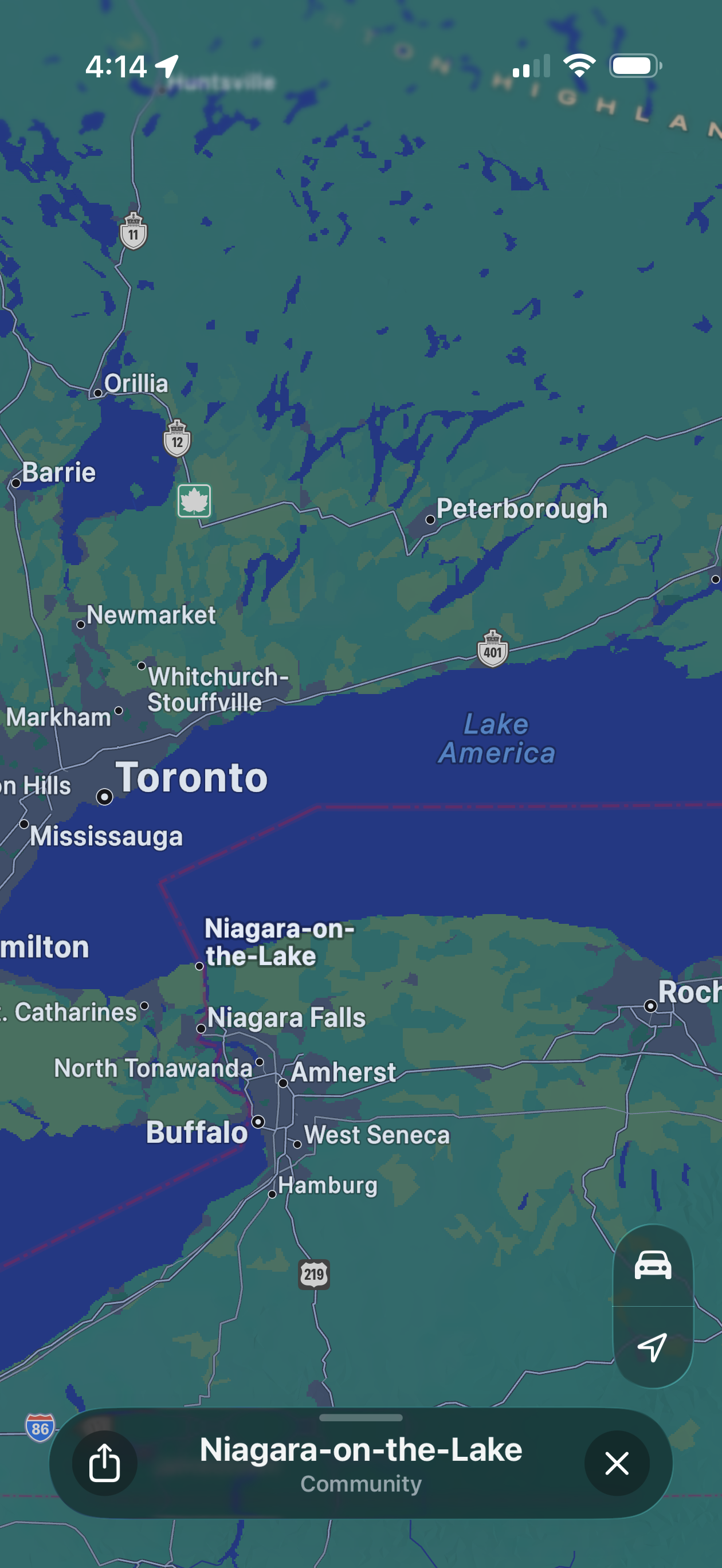 Apple is current! But it'll always be "Lake Ontario" to me.
Dylan worked remotely from his international trips, and that may seem like a mitigating circumstance -- except that the City had a policy that prohibited remote work from outside the United States unless the employee had permission. Dylan apparently did his international remote work without authorization, which in itself was ground for termination.
 “Now, this is what I call a reasonable accommodation!”
After learning that Dylan could travel to Cancún when he couldn’t manage to get to his office, the City put Dylan on a total medical leave of absence and told him that he had to drop his lawsuit and return to full duty by August 31, 2026, or resign.
Instead, Dylan asked the court, among other things, to preliminarily enjoin (block) the termination and order the City to let him work according to the City's normal hybrid work policy, which was three days in-office and two days remote per week.
On the day of the August 31 deadline, the court issued its decision. The court denied Dylan’s requests. There were procedural grounds, which I won't bore you with. In addition, according to the court, Dylan had not shown that he was likely to succeed with his lawsuit because
- His international travel, which he didn't dispute, undercut his claim that he was unable to come to the office to work.
- His request that the court order the City to let him have the hybrid arrangement undercut his claim that he was unable to work at the office at all.
It's now September 4. August 31 has come and gone. We don’t know Dylan's current employment status. I hope for his sake that he agreed to return to full duty.
Quick disclaimer: Dylan’s motion, which the court denied, was only for temporary action to prevent the City from going ahead with its “take it or leave it” proposition. After the case is fully litigated, Dylan could still prevail on his claims of disability discrimination, failure to accommodate, and retaliation.
Happy Labor Day!
Off topic, I hope you all have a great Labor Day weekend. In case you need to make the long weekend pass more quickly (sure), here is my thrilling Labor Day quiz from a few years back. It’s still accurate – I checked!
 Of Counsel & Chief Legal Editor
Robin also conducts internal investigations and delivers training for HR professionals, managers, and employees on topics such as harassment prevention, disability accommodation, and leave management.
Robin is editor in chief ...
This is Constangy’s flagship law blog, founded in 2010 by Robin Shea, who is chief legal editor and a regular contributor. This nationally recognized blog also features posts from other Constangy attorneys in the areas of immigration, labor relations, and sports law, keeping HR professionals and employers informed about the latest legal trends.