A little more employer-friendly?
On July 3, the U.S. Equal Employment Opportunity Commission submitted 10 proposed actions to the federal Office of Management and Budget. These are among the first formal regulatory actions taken by the EEOC since it got its quorum back in late 2025.
A political digression
Before I go on to the specific initiatives, here's some background on the politics.
 Elections have consequences. Who'da thunk?
When Donald Trump was inaugurated in January 2025, the EEOC had a Democratic majority: Chair Charlotte Burrows, who was initially appointed by Barack Obama; Vice Chair Jocelyn Samuels, who was initially appointed as a Commissioner by President Trump during his first term to fill a “Democratic” slot; and Kalpana Kotagal, who was appointed by Joe Biden. The only Republican on the five-person Commission was the current Chair, Andrea Lucas, who was initially appointed by President Trump during his first term. (The fifth slot was vacant.)
Almost immediately after he took office for the second time, President Trump fired Ms. Burrows and Ms. Samuels*.
*As David Phippen posted earlier this week, Jocelyn Samuels sued over her termination but dropped the suit after last week's Supreme Court decision in Trump v. Slaughter, in which the Court said that the President had the authority to terminate many appointed federal officials without “just cause.”
The terminations of Ms. Burrows and Ms. Samuels left a two-person Commission consisting of one Democrat (Kotagal), one Republican (Lucas, who became Acting Chair), and three vacancies.
And no quorum. Gotta have three for a quorum.
Then, last October, President Trump appointed Brittany Panuccio, another Republican, to the Commission. This gave the EEOC its quorum back as well as a Republican majority. Ms. Lucas was appointed “real, non-acting” Chair in November.
That’s where the EEOC stands now: Two Republicans (Chair Lucas and Commissioner Panuccio), one Democrat (Commissioner Kotagal), and two vacancies.
As one would expect, the Republican-majority EEOC doesn't agree with all of the actions taken by the EEOC when it had a Democratic majority. And now that there’s a quorum, something’s going to be done about it.
Which brings us to the initiatives submitted this week to the OMB.
The Big Ten
No Sherrone Moore-Paige Shiver references here, I promise! Except this one.
We can’t see the specifics of the Commission's initiatives until the OMB approves them, assuming it does. But here is what we know now, and of course, we’ll follow up with more information once it becomes available.
No. 1: Final rule to rescind the 1979 Appendix to the EEOC’s Guidelines on Discrimination Because of Sex. These guidelines were issued not long after the old Pregnancy Discrimination Act took effect. (The Appendix starts on page 6 of the linked pdf.)
The PDA is old, but it's still kicking. It amended Title VII to provide that discrimination because of pregnancy or pregnancy-related conditions was unlawful. The current EEOC is fine with that as far as I know, but they say that the Appendix is obsolete because of the Pregnant Workers Fairness Act, which was signed into law by President Biden in late 2022 (effective in 2023) and requires employers to go beyond mere “non-discrimination” and make reasonable accommodations for pregnancy and related conditions.
Nos. 2 and 3: Final rule to rescind the EEOC’s Uniform Guidelines on Employee Selection Procedures, which were issued in 1978, and proposed rule to rescind the recordkeeping requirements related to the Uniform Guidelines. These actions appear to be targeting the “disparate impact” theory of discrimination. Under this theory, an employer might be liable for discrimination if it has a neutral policy or practice that disproportionately affects people of a certain race, national origin, or other protected category. Even if the employer did not intend to discriminate. President Trump has been highly critical of this theory.
 Details and a registration link are available here.
No. 4: Final rule to rescind the EEOC’s Guidelines on Discrimination Because of National Origin. Under these guidelines, issued in 1980, the EEOC made a presumption that employers with “English-only” policies were liable for disparate impact discrimination based on national origin. According to the current EEOC, the 1980 guidelines conflict with court decisions and the Civil Rights Act of 1991, which say that the burden of proof in disparate impact cases remains with the plaintiff at all times. This proposal seems to be another step in carrying out the Administration's objective of eliminating the disparate impact theory of discrimination altogether, and also in support of President Trump’s 2025 declaration that English is the official language of the United States.
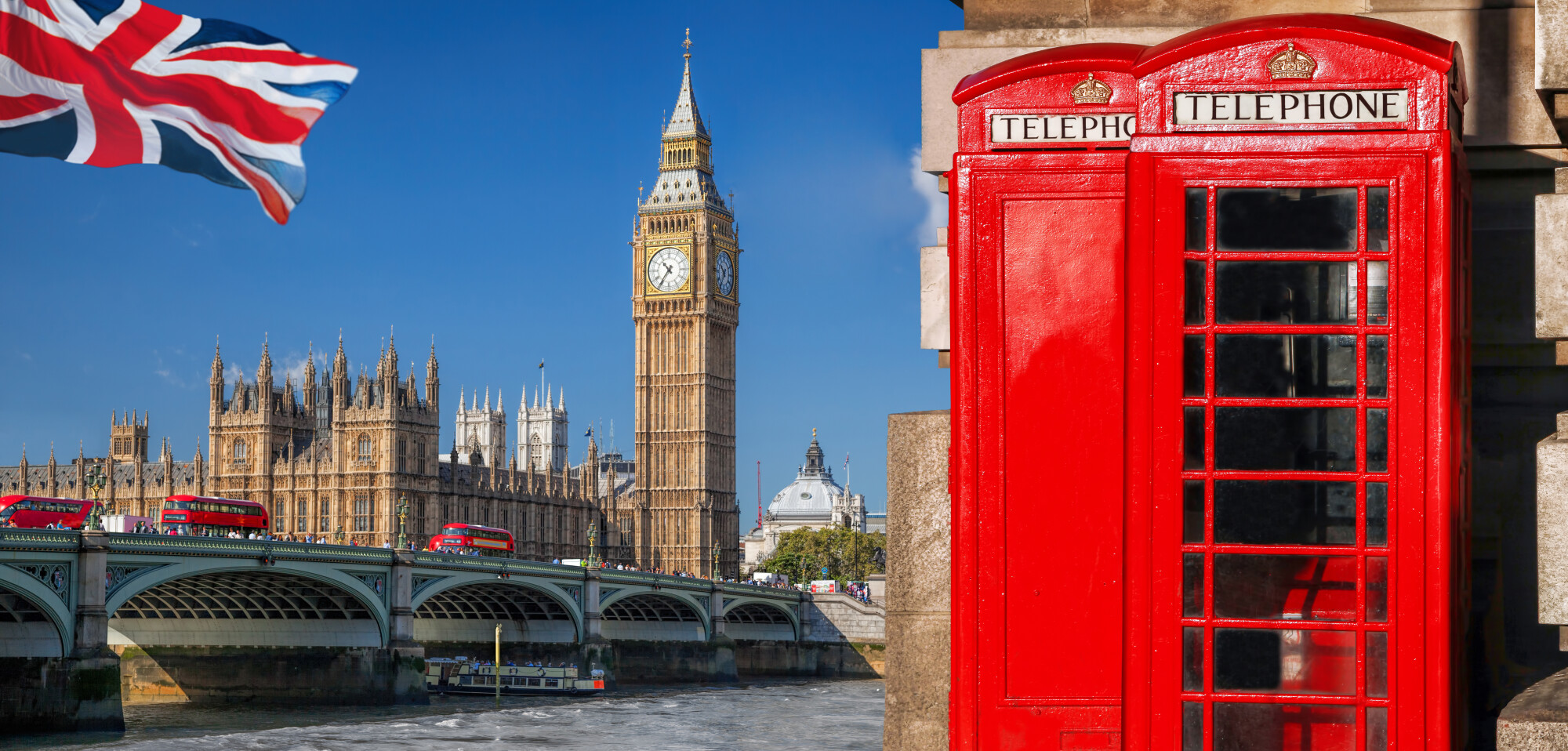 "English-only here, old chap."
No. 5: Final rule to rescind 1979 “Affirmative Action Appropriate Under Title VII of the Civil Rights Act of 1964.” Title VII prohibits discrimination based on race, national origin, color, or sex, period. Whether the victim is in a “minority” group or in the “majority,” it’s still unlawful.
But the EEOC has historically taken the position that certain types of voluntary affirmative action plans adopted to address past discrimination will not violate Title VII. The current EEOC intends to do away with that.
Cara Crotty has covered this already, and I can’t improve on what she’s said, so here is the link to Cara’s post.
No. 6: Proposed rule to rescind the requirement that employers file annual EEO reports. This would do away not only with the EEO-1 reports that are currently required from many private sector employers, but also with EEO-2 (apprenticeship programs), -3 (unions), -4 (state and local governments), and -5 (public schools) reports.
Currently, EEO-1 reports must be filed by private employers with 100 or more employees, and by private employers who are federal contractors if they have 50 or more employees.
No. 7: Proposed rule to revise the regulations issued by the Biden-era EEOC related to the Pregnant Workers Fairness Act. I had problems with those regulations, and vented about them here. The current EEOC says, “Among other revisions, the EEOC proposes revising language in the regulations regarding the interpretation of the words ‘pregnancy, childbirth, or related medical conditions.’” Some commentators have said that the EEOC will remove elective abortions as protected “pregnancy” or “pregnancy-related” conditions that have to be accommodated.
 "Beats me, Honey. Some human just flew by and dropped him in our nest."
The last three initiatives are more administrative than substantive in nature.
No. 8: Final rule to increase employer civil monetary penalties for violating their notice-posting requirements under Title VII, the Americans with Disabilities Act, the Pregnant Workers Fairness Act, and the Genetic Information Nondiscrimination Act. This appears to be a routine inflation-related adjustment.
Nos. 9 and 10: Remember, you read it here first! *sarc* The EEOC intends to issue a final rule providing that it can post information about referrals to state Fair Employment Practices agencies online rather than doing it in regulations. Finally, the EEOC proposes to rescind a rule that requires its offices to allow records to be reviewed in the offices’ public reading rooms. The proposed rescission would not apply to the EEOC headquarters.
 Of Counsel & Chief Legal Editor
Robin also conducts internal investigations and delivers training for HR professionals, managers, and employees on topics such as harassment prevention, disability accommodation, and leave management.
Robin is editor in chief ...
This is Constangy’s flagship law blog, founded in 2010 by Robin Shea, who is chief legal editor and a regular contributor. This nationally recognized blog also features posts from other Constangy attorneys in the areas of immigration, labor relations, and sports law, keeping HR professionals and employers informed about the latest legal trends.